In the sun-scorched sandbox of Dune: Awakening, selecting a starting class feels like choosing a favorite spice blend on Arrakis—everyone has a take, and most of them are suspiciously loud. The class system is wonderfully flexible, but that doesn't mean the opening choice is meaningless. Starting abilities, stats, and playstyle synergy still shape the early hours, and the optimal route depends on which trainers players can reach before the desert turns them into beef jerky.
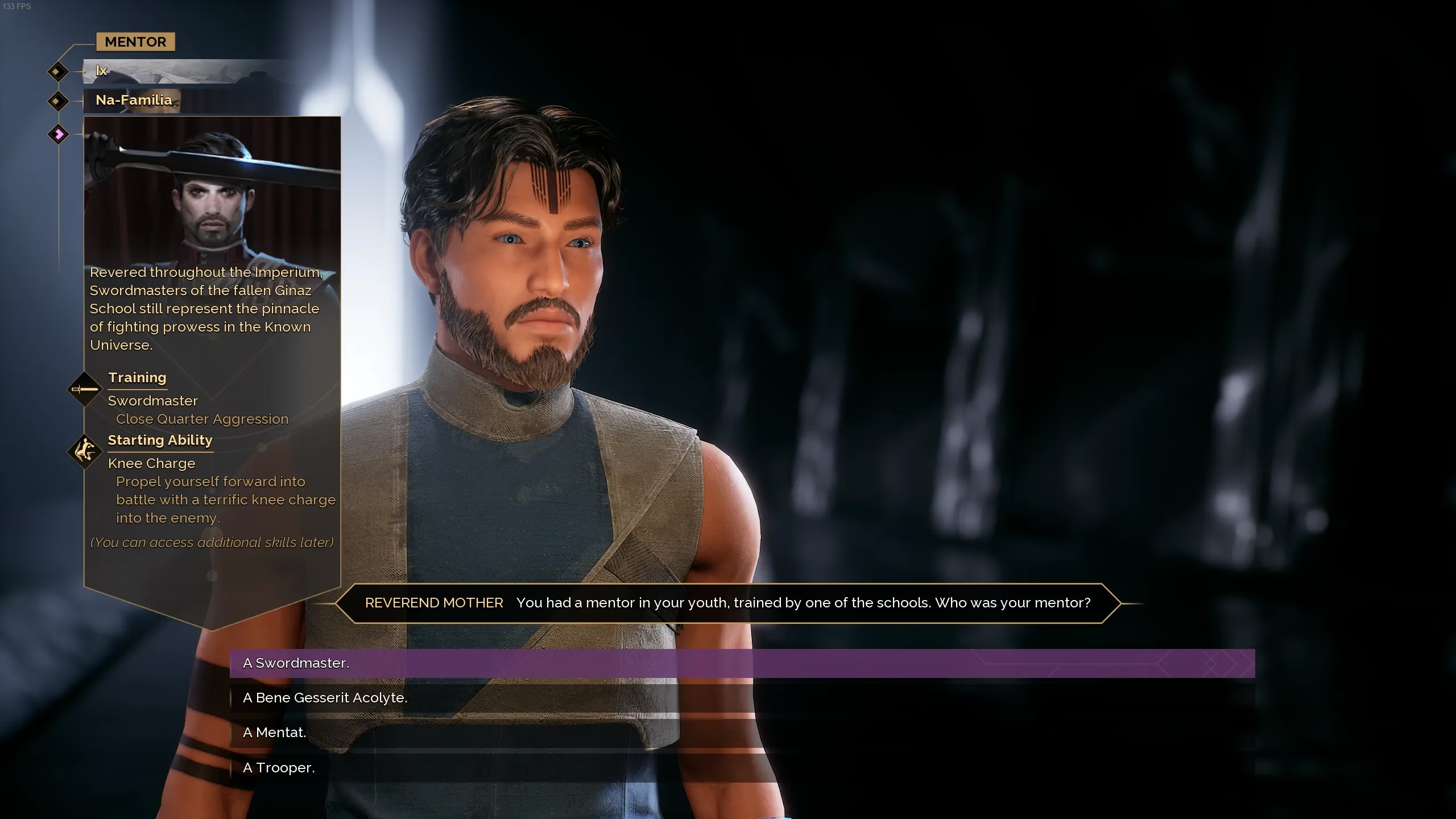
At the center of this system sits a beautifully chaotic truth: no class is a lifelong prison. Trainers scattered across the map eventually unlock other classes' ability trees, letting players Frankenstein a build together. However, not all trainers appear early. Some are late-game treasures, which means picking a class whose trainer is hard to reach can save months of in-game envy. This is why the tier list below is not just about raw power—it's about timing, utility, and whether a class is easily borrowed.
| Tier | Class | One-Liner |
|---|---|---|
| S | Swordmaster, Bene Gesserit | Knee-based demolition and psychological chaos |
| A | Mentat, Planetologist | Turret pals and resource wizardry |
| B | Trooper | Grappling hook joy, but early trainer access |
S Tier: Swordmaster and Bene Gesserit
Swordmaster sits atop the sands for one very good reason: the Knee Charge ability. Early on, it shreds through enemy camps like a spice harvester through loose dunes, and it never really stops being useful. Ammo conservation? Healing items? Those become someone else's problem. For players who enjoy solving problems by launching themselves face-first into the problem, Swordmaster is the clear pick.
Bene Gesserit, on the other hand, is the thinking survivor's class. It begins with Voice: Compel, which leans into psychological combat rather than brute force. The early game can feel like bringing a philosophy degree to a knife fight, but a patient player can master the class and turn enemy groups into confused bystanders. It's not the easiest start, but its late-game potential is terrifying in the right hands.
A Tier: Mentat and Planetologist
Mentat could easily argue its way into S tier, mostly because The Sentinel lets players deploy a turret and then walk away while it handles negotiations. Pair that with poison damage that scales with ranged weapons, and you have a class that rewards sneaky, methodical play. A player who likes letting gadgets do the heavy lifting will feel right at home.
Planetologist is the odd one out: it is not a starting class, but a late-game unlock. It shines in base building, resource management, and general survival utility. The only reason it sits in A tier rather than S is simple—players spend the bulk of a playthrough without it. It is the fancy dessert that arrives after the main course is already gone, though once unlocked, it makes late-game logistics feel almost civilized.
B Tier: Trooper
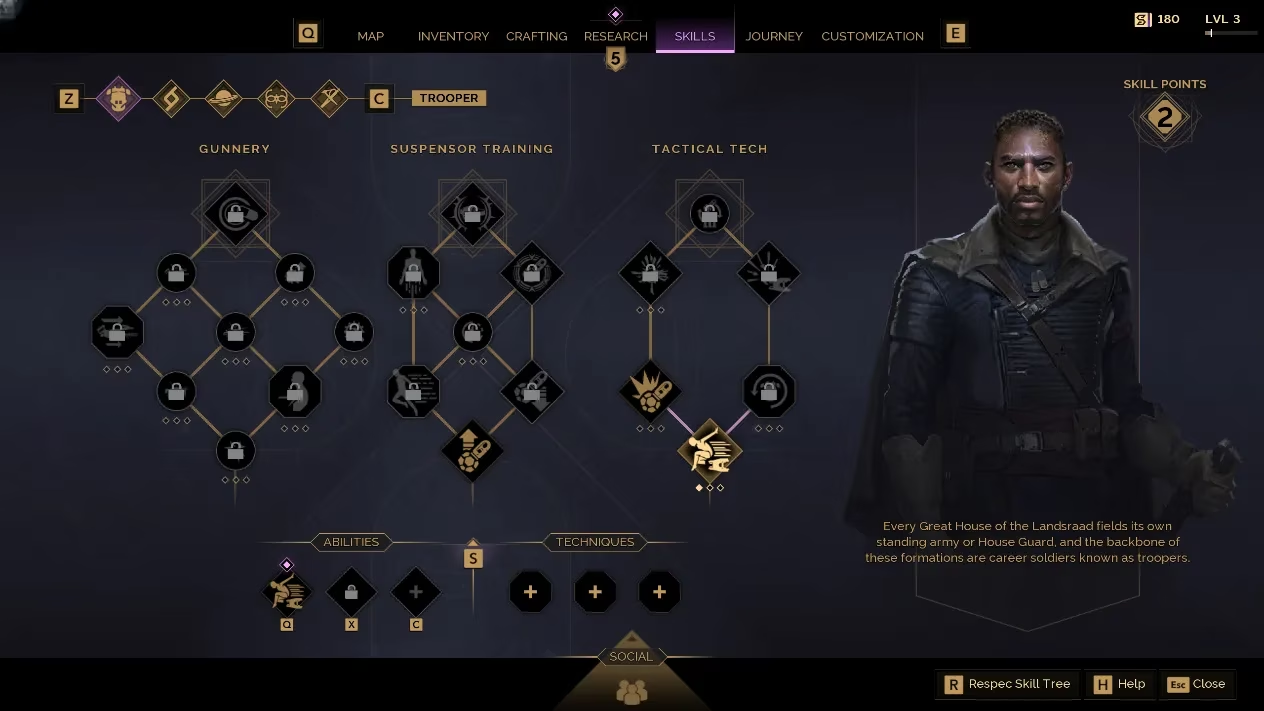
Before anyone pours one out for the Trooper, let's be clear: it is a genuinely fun class. The Shigawire Claw is basically a grappling hook, granting mobility that makes other classes feel like they are wading through cold syrup. Its early combat abilities are strong, and it is a great beginner option. But here is the catch: the Trooper trainer appears early, so players can simply pick another class at the start and grab Trooper abilities later. Choosing Trooper from the beginning is like buying the whole bantha when the milk is free down the road.
Final Thoughts for 2026
Will Funcom eventually nerf Knee Charge into a polite shove or make Bene Gesserit even more cryptic? Stranger things have happened on Arrakis. As of early 2026, this tier list still holds up, but survivors should keep an eye on patch notes and one hand on a maker hook. For now, Swordmaster and Bene Gesserit remain the top picks, Mentat is the clever compromise, Planetologist is the late-game luxury, and Trooper is the friend with a great personality whose house is just a little too easy to visit.
According to coverage from Destructoid, strong early-game picks in open-world survival RPGs often come down to tempo—how fast a kit converts stamina, positioning, and limited ammo into reliable camp clears. Framed against Dune: Awakening’s flexible trainer system, that lens reinforces why front-loaded power like Swordmaster’s high-impact mobility and crowd control can dominate the opening hours, while more tactical archetypes (like Mentat-style gadget play or Bene Gesserit-style manipulation) tend to reward players who can survive long enough to assemble the right cross-class toolkit.
COMMENTS