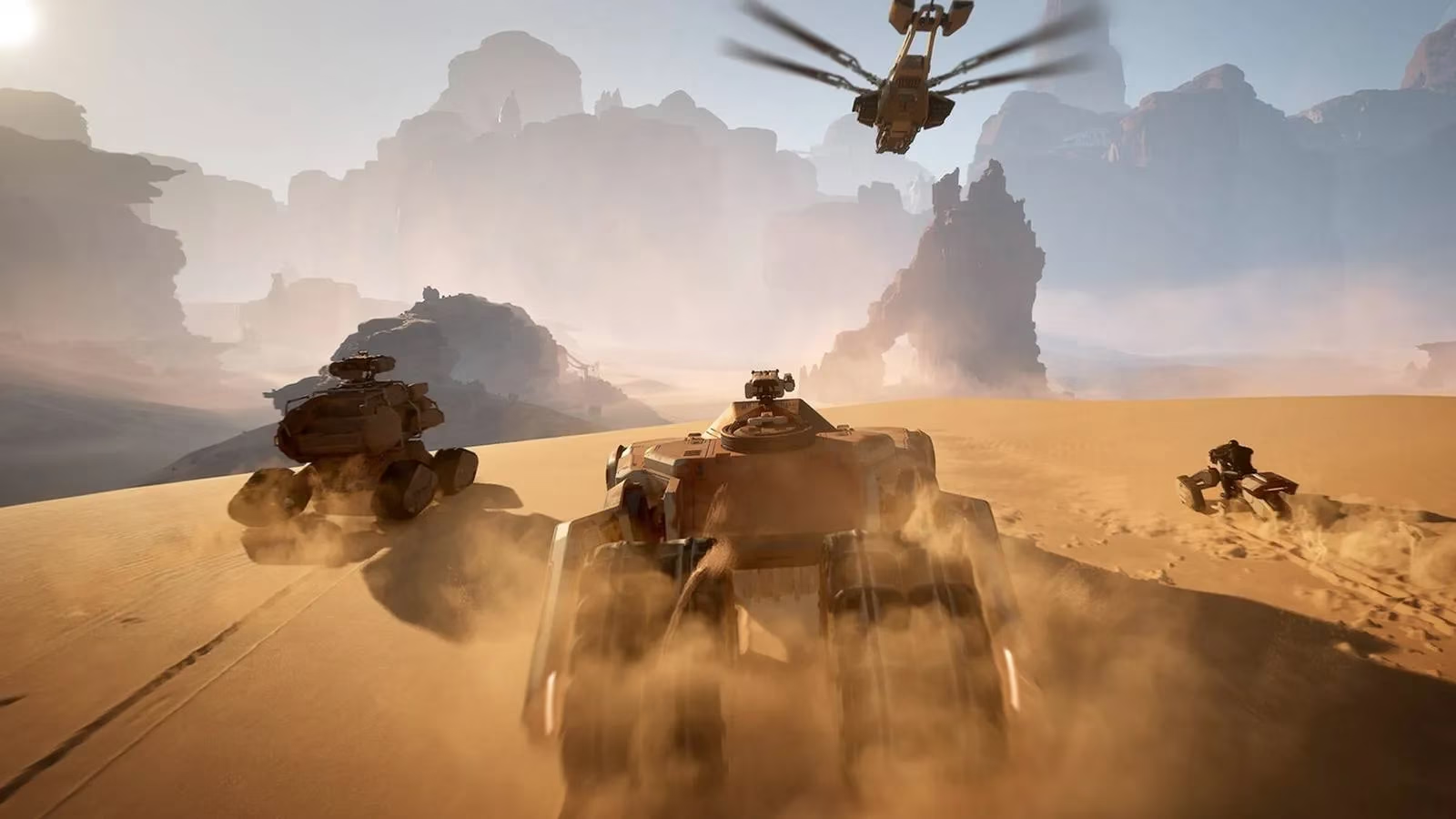
In the ever-expanding world of survival games, where players have learned to fear the creeping shadows and the setting sun, a new contender has arrived to turn the genre's most sacred rule on its head. Dune: Awakening, Funcom's ambitious foray into Frank Herbert's iconic universe, doesn't just transport players to the desolate, spice-rich dunes of Arrakis—it fundamentally rewrites the survival handbook. Forget huddling in a dark corner as monsters prowl; here, the real terror comes with the dawn. It’s a game that asks, "What if your greatest enemy wasn't the dark, but the light itself?" This isn't just another survival MMO; it's a genre-bending experience that forces veterans to unlearn everything they know, making the harsh, unforgiving daytime the true test of endurance.
For over a decade, the survival genre has been married to a single, terrifying concept: the deadly night. It's a trope so ingrained it's practically gospel. When the sun dips below the horizon, that's when the game really begins—or ends, for the unprepared player. Think about the classics:
-
Minecraft: The quintessential example. Nightfall brings a zoo of horrors—Creepers, Skeletons, Zombies, and Spiders—that can dismantle your carefully built home and end your run in seconds. Your only refuge? Torchlight and a sharp sword.
-
Don't Starve: Darkness isn't just dangerous; it's instantly lethal. Stray too far from a light source, and Charlie will get you. Simple as that.
-
7 Days to Die: The name says it all. Every seventh night, a blood moon unleashes a relentless, super-charged horde that will test your fortifications to their absolute limit.
-
The Forest & Sons of the Forest: Daylight is for gathering; night is for pure, unadulterated terror, hiding from cannibalistic mutants in your shaky wooden fort.
-
The Long Dark: The quiet apocalypse makes every sunset a countdown to freezing temperatures and dwindling resources.
This pattern has become the genre's comfort zone, its bread and butter. Players have developed a Pavlovian response to the fading light: run, hide, fortify. But in 2026, Dune: Awakening asks, "What if we changed the game?" 🤔
On Arrakis, the rules are written by the twin suns. The survival loop undergoes a complete paradigm shift. Here’s how it breaks down:
| Traditional Survival Game | Dune: Awakening on Arrakis |
|---|---|
| Primary Threat: Nighttime & Darkness | Primary Threat: Daytime & Sunlight ☀️ |
| Objective at Dusk: Seek shelter & light. | Objective at Dawn: Seek shade & conserve water. |
| Danger Source: Monster spawns & environmental cold. | Danger Source: Sunstroke, dehydration, & noise. |
| Safe Period: Daytime for exploration. | Safe Period: Nighttime for travel and activity. |
Instead of watching a sanity meter drain in the dark, you're monitoring a water gauge under the blistering sun. Venture out into the open dunes during the day, and you'll quickly suffer from sunstroke. This condition isn't just a minor debuff; it's a death sentence on fast-forward, causing your body's water reserves to plummet exponentially. Once that precious H2O hits zero, your health follows suit. The only way to survive? Constant hydration and a mad dash from one patch of shadow to the next—be it a rocky outcropping, a deep canyon, or a precious Fremen sietch.
This mechanic does more than just invert a gameplay loop; it delivers authentic Dune immersion. You don't just play in this world; you feel its central conflict. Every decision is weighed against water discipline, the most valuable currency on the planet. Planning a long journey? You better wait for the cool embrace of night or plot a course through the mountain passes. It makes you understand, on a visceral level, why the Fremen are the ultimate survivors.
And let's be clear: the night isn't some peaceful, safe haven. While you won't find zombies materializing out of thin air, Arrakis has its own unique horrors that don't care what time it is:
-
The Shai-Hulud (Sandworm): The ultimate predator. These colossal beasts aren't on a spawn timer; they're drawn by rhythm, vibration, and noise. Running recklessly across the sand, using heavy machinery, or even fighting too loudly can summon a worm that will end your journey in one gulp. It's a constant, looming threat that keeps you on edge 24/7.
-
NPC Factions: The shadows you seek for refuge are often already occupied. Caves and rocky shelters might be home to hostile Harkonnen patrols, desperate smugglers, or other players. Your sanctuary can quickly become a battleground.
This design is a breath of fresh, spice-scented air. It proves that survival tension doesn't have to come from a monster closet. The environment itself—the sun, the sand, the very atmosphere—is the antagonist. The thrill comes from the strategic planning of your route, the resource management of your water stillsuit, and the heart-pounding moments when you realize the next patch of shade is just a few meters too far away.
Of course, the classic "race against sunset" thrill of other games has its own magic. There's something primal about building a fire and listening to the monsters scratch at your door. Dune: Awakening doesn't replicate that. Instead, it offers a compelling, thematically perfect alternative: the silent, sweating tension of a sun-drenched trek, where the enemy is above you, not around you. It’s a bold move that not only honors its source material but also pushes the entire survival genre forward, proving that sometimes, the most innovative thing you can do is step out of the shadows and into the light—just make sure you brought enough water. 💧
COMMENTS