Arrakis is a hostile rock with a spice problem, and Dune: Awakening has decided that the best way to enjoy it is with a few heavily dehydrated acquaintances. The multiplayer setup is not exactly a Guild Navigator-level puzzle, but the menus have a talent for hiding obvious buttons in places that feel designed by a Harkonnen intern. In 2026, the game is no longer a closed-beta curiosity, yet the same social-menu rituals remain the difference between a thriving desert commune and a lone player arguing with a sandworm.
The short version is pleasantly simple. A player opens the social menu, which lurks at the bottom of any menu such as the map or inventory. In the players tab, they search for a friend's character name or account name, both of which appear in the top left of that screen. Then comes the friend request, the acceptance, and the party invite. Friend invites can also be accepted by pressing Enter when the prompt appears before the timer expires, or through the social menu later. If two players cannot find or join each other, the first suspect is boring but reliable: they are probably not on the same server. Arrakis may be vast, but server boundaries are pettier than a Landsraad dispute.
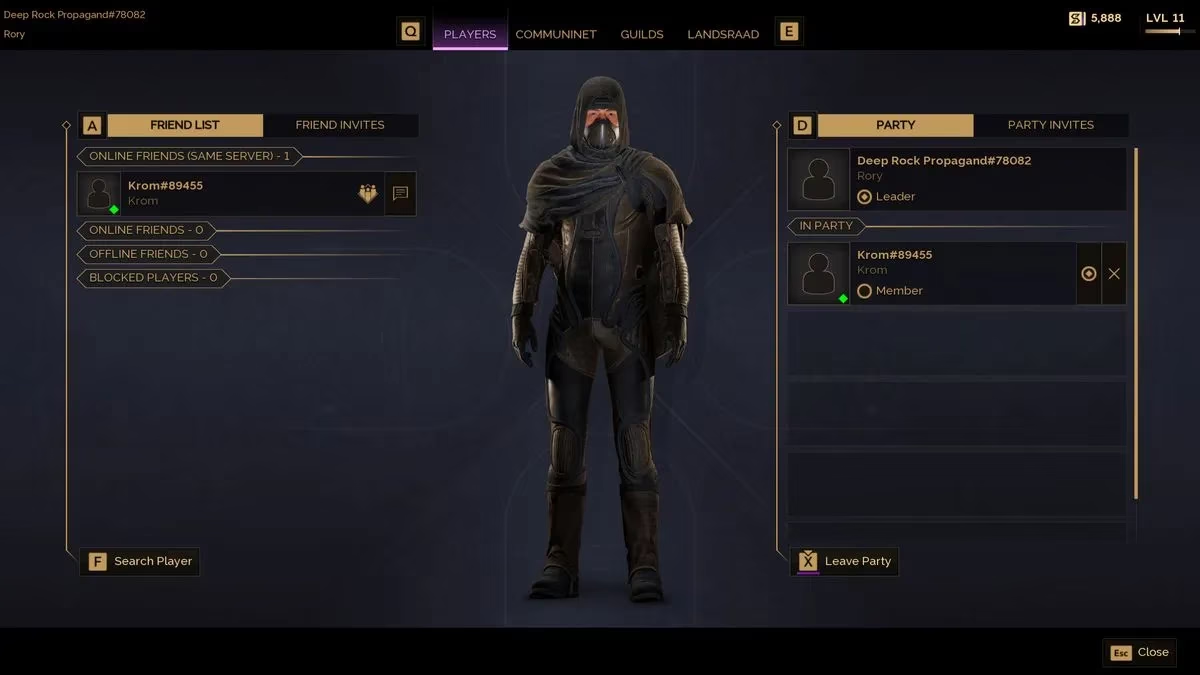
Once a party exists, the social menu's players tab becomes a small administrative bunker. Players can invite more people, kick them, leave the party, and manage individual permissions and ranks. Party members are marked on the map, which is a polite way of saying that a friend can now watch another friend walk directly toward a giant worm with confidence and poor judgment. The cooperative options are broad: building bases, exploring, and even riding the same sandbike if the second-seat module has been installed. It is a proper desert road trip, assuming the road is sand and the trip is being chased by something with too many teeth.
One delightful loophole is that multiplayer can politely shove large chunks of intended progression into the bin. A newcomer can join a late-game player and be handed a sandbike, an ornithopter, or high-end resources for free. One tester even reached the second region before officially unlocking it; the story cutscene fired ahead of schedule, but the prerequisite quests did not magically complete themselves. In other words, Dune: Awakening is happy to let friends share toys, but it still expects everyone to do the homework eventually.
This is why permissions deserve more attention than they usually get. The default rank for newcomers is associate, a title that sounds friendly and behaves like a cautious office manager. Associates cannot add or remove players, and they cannot interact with most base-building features. They cannot open containers or access vehicles unless the owner deliberately lowers the access level to associates. A sufficiently restricted door can even trap someone inside a building, which is an excellent feature for players who enjoy trust exercises and a terrible feature for players who enjoy leaving rooms.

The practical permission ladder looks roughly like this:
| Rank | What it can do | What it cannot do |
|---|---|---|
| Associate (default) | Wander, chat, exist in the party, and use shared spaces if access is lowered | Add or remove players, open containers, use vehicles, or interact with most base-building pieces |
| Co-owner | Add and remove players, interact with base items, and share a proper team home | Promote or demote players, including themselves |
| Party owner or manager | Invite, kick, leave, and tweak ranks and permissions | Escape the burden of being the one who reads the menus |
Promoting someone to co-owner is the closest thing to saying, “Yes, this person may touch the spice fridge.” Co-owners can add and remove players and interact with base items, so a trusted friend can share the home and the loot like a proper teammate. Crucially, even co-owners cannot promote or demote players, which means a base cannot be fully usurped by a charming freeloader with a clipboard. It is a rare case of bureaucracy doing something useful.
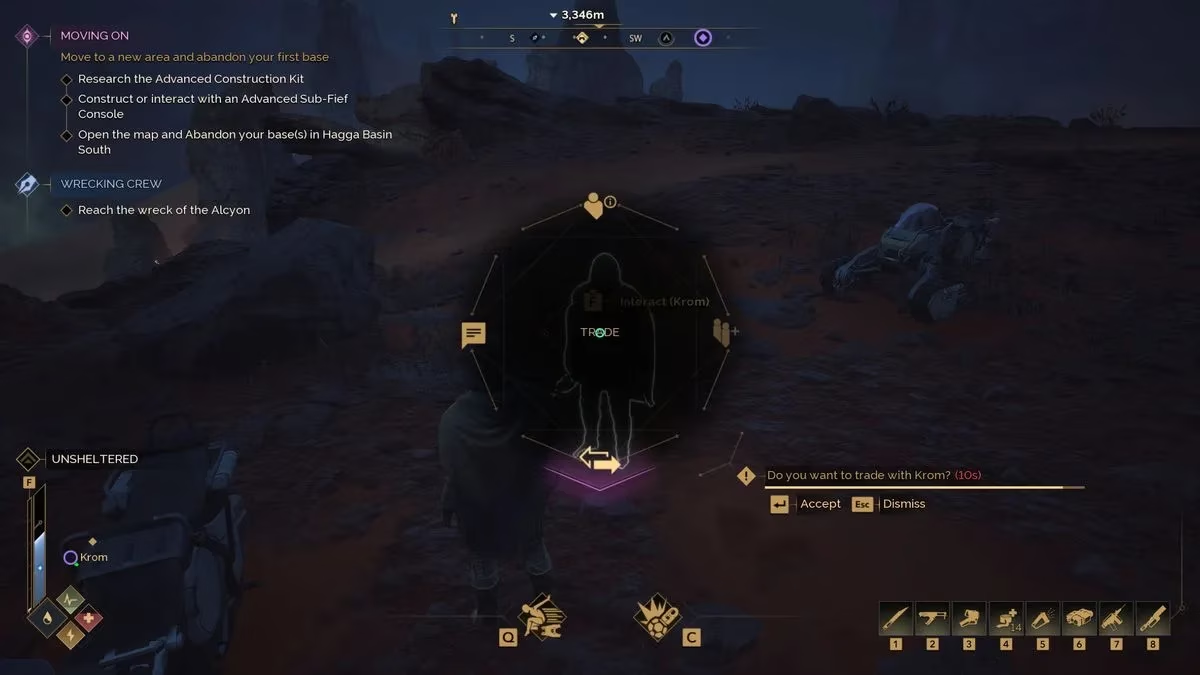
Trading is another social system with sharp edges. A player holds the interact key while looking at another player and selects the trade option, represented by two arrows. Both sides can offer items from their inventory, including high-end resources that one player might not have unlocked yet. Both must accept before the trade goes through, so a prized possession cannot simply vanish because someone clicked too fast. During the closed beta, trades were notably buggy and sometimes failed despite mutual agreement; the remedy was usually a patient retry. The alternative is dropping items on the floor, where anyone can pick them up. That method is fast, convenient, and about as secure as leaving a signed sandbike title in the middle of a spice field.
Crossplay is the caveat that refuses to sit still. The closed-beta build had no crossplay, and it was not available at PC launch either. Console versions were promised for a later, unspecified time, and Funcom had not confirmed whether crossplay would eventually arrive. By 2026, console timing and crossplay support are exactly the sort of details that should be checked against current patch notes rather than treated as permanent lore. The durable rule remains the same: players must be on the same server before they can share a party, a base, or a deeply questionable sandbike ride.
Ultimately, Dune: Awakening multiplayer is a social contract written in sand, spice, and menu tabs. Friends can make Arrakis less lonely, more efficient, and considerably more chaotic. The wise player groups up, checks the server, promotes only the trustworthy, and remembers that a default associate cannot open a chest but can absolutely stand outside one looking thoughtful. 🤝🏜️
COMMENTS