I still remember the first time Arrakis killed me. It was not a Harkonnen blade or a political betrayal. It was the sun. I had been walking for maybe three minutes, chasing a ribbon of shade, when my water meter—an imaginary thing in my head—hit zero. In Dune: Awakening, the desert does not negotiate. It simply waits for you to make one wrong step. That early preview session, guided by Funcom creative director Joel Bylos, felt less like a game demo and more like being handed a one-way ticket to a planet that wanted me dead. And yet, I could not stop thinking about it. Now, in 2026, the closed beta is behind us and Dune: Awakening has spread across PC, Xbox Series X|S, and PlayStation 5, but that first lesson remains: survival is not a feature. It is the whole point.
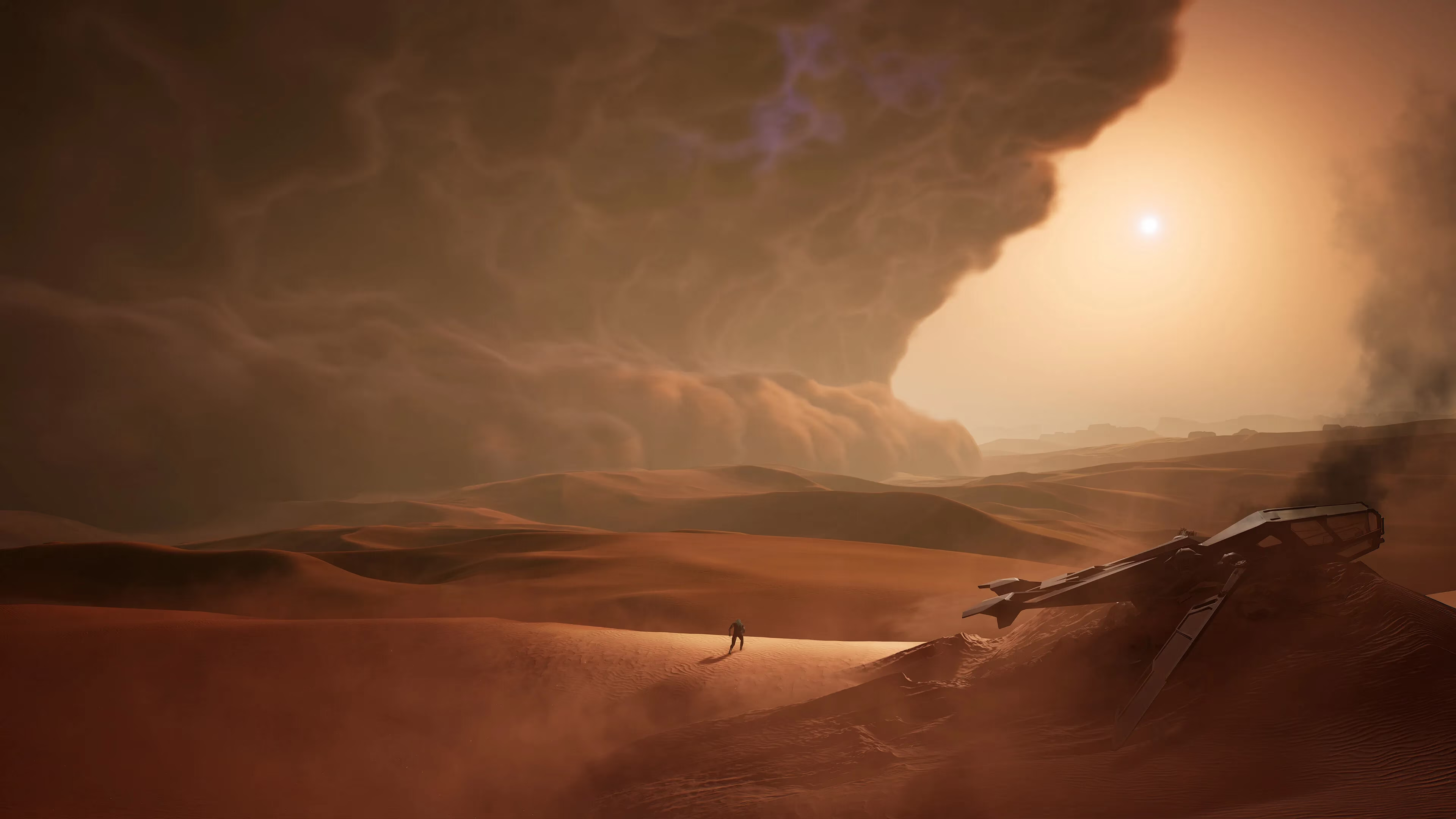
From the first minute, I was a castaway. No stillsuit. No provisions. Three survival elements pressed down on me like a boot: find water, secure shelter, and avoid sandworms. The burning sun meant I had to move quickly between patches of shade. Without a stillsuit—the Dune universe apparatus that recycles a person's water—I needed to drink fast or die faster. Bylos said I would craft a makeshift knife early on, and he hinted that I might need to take someone else's water for myself. That line stayed with me. Thirst was a small, dry animal chewing at the back of my throat. Arrakis is a furnace with a memory; it remembers every drop you waste.
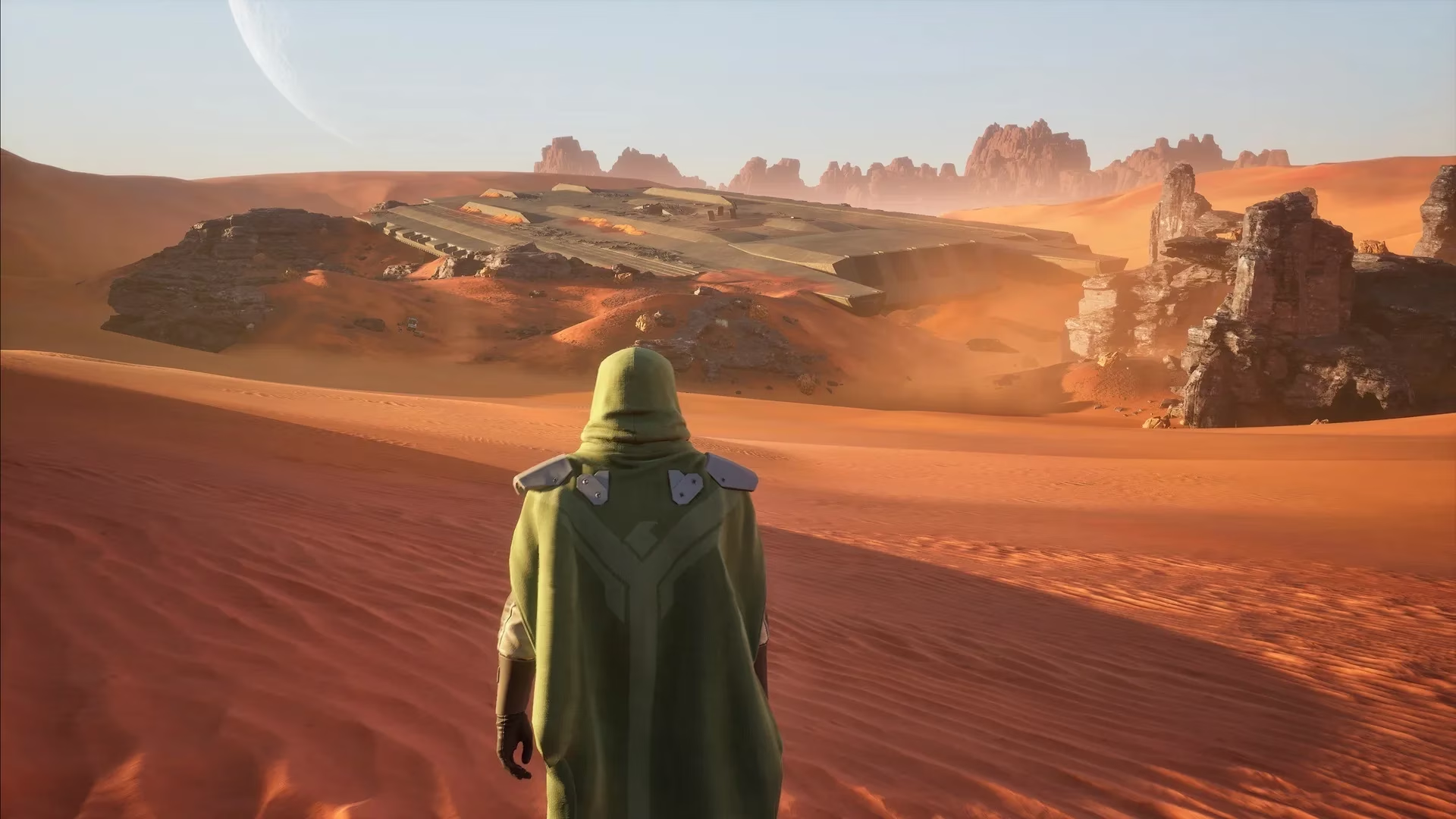
Funcom built Dune: Awakening on its earlier survival success, Conan Exiles. But Bylos admitted that merging survival-game demands with MMO approachability had been difficult. He joked that it had been 'horrible, really.' I understood why. MMOs often hand you a new ability after ten minutes of killing the same monsters. Awakening does not feel like that. It is demanding from the start. You harvest rocks and minerals, construct a base, and climb a tech tree to unlock new tools and weapons. Yet a story calls to you too. Before long, your character has a spice dream—a premonition driven by the valuable substance that fuels the conflict on Arrakis—and that dream pulls you into the narrative.
If you are a Dune fan, that narrative sounds intriguing. Dune: Awakening imagines an alternate history from Frank Herbert's books and Denis Villeneuve's films. A key moment plays out differently, resulting in a world where characters who died in the canonical story are still alive. Funcom has not said exactly which moment that is. Character creation also puts you into the iconic pain box scene. A Bene Gesserit reverend mother interrogates you while you make choices about your background. In the book and movie, that test is rare. If every player goes through it, then every player character carries messianic implications. That is a bold, strange, and very Dune-like idea.
The title itself comes from a line in the novel. Paul's father, Duke Leto Atreides, tells him that new experiences are necessary for growth. 'Without change, something sleeps inside us, and seldom awakens,' he says. 'The sleeper must awaken.' Bylos called that a nice encapsulation of both the player journey and the storyline. The game's thematic pillars are addiction, freedom, identity, and erosion. Arrakis erodes all of them. Atreides nobility may corrode. Harkonnen addiction to power and spice may worsen. Smugglers may call themselves free while still serving the Guild. These questions apply to players too.
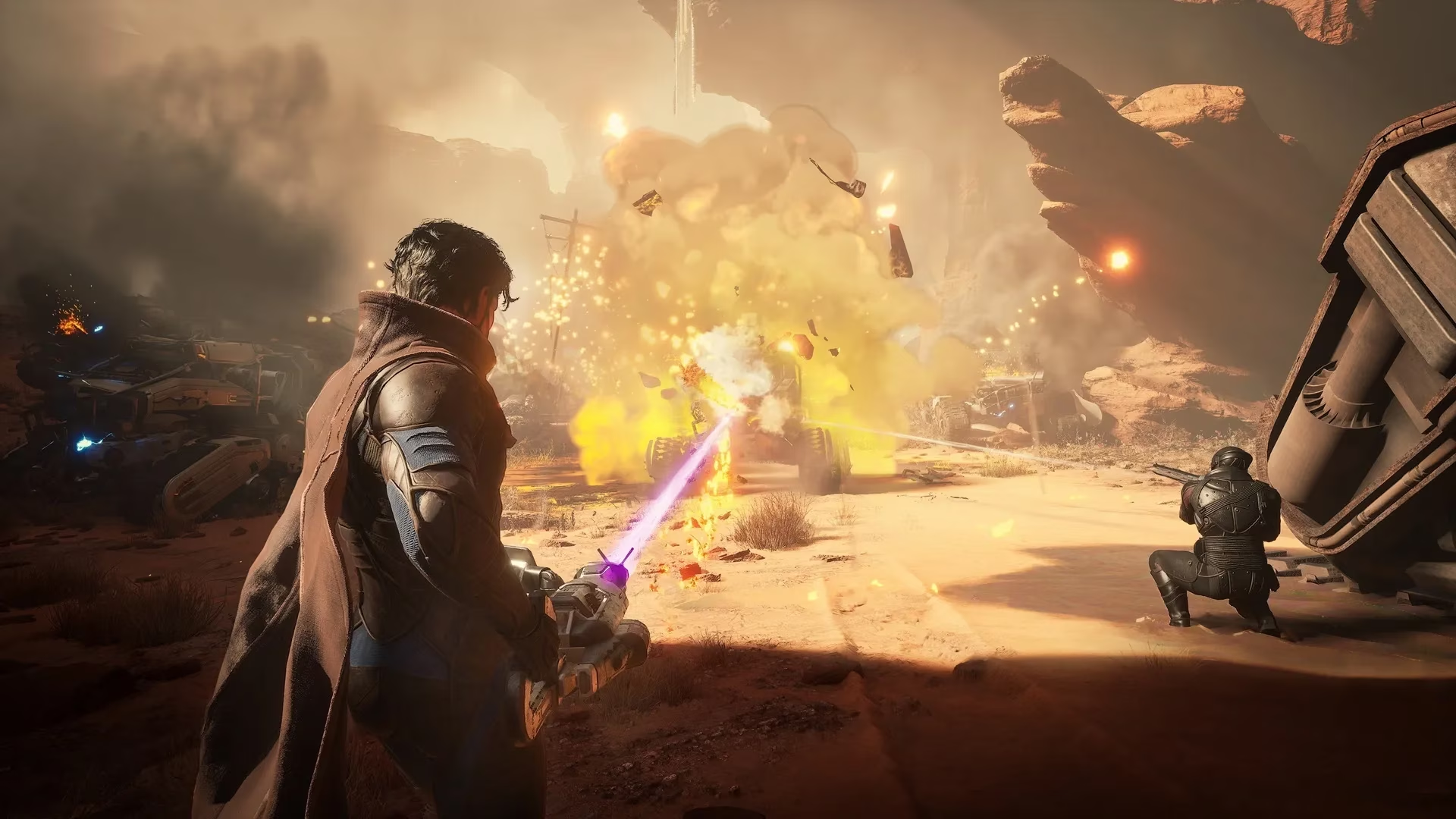
Dune: Awakening takes an RPG-like approach to story, with dialogue options and factions, but it is not a tightly structured, story-driven experience. It is a sandbox. You set your own agenda. Even while working through narrative beats, you must craft new items and advance through survival and open-world systems. In the late game, Funcom wants player-driven conflict to matter as much as the wider war on Arrakis. You can form guilds, craft goods for the Exchange auction house, or venture into the deep desert. That PvP area offers spice harvesting, rare items, and valuable schematics—along with the risk that other players will attack you and steal everything.
Death is ever-present, though not as permanent as it is in the novels. If you take too much damage, a friend or teammate can revive you, or you can use water to revive yourself if you carry enough. Otherwise, you respawn at a designated point like a vehicle or base. But if a sandworm kills you, you permanently lose everything you were carrying. Not permadeath, but permanent loss. That distinction makes every rumble under the sand feel like a countdown.
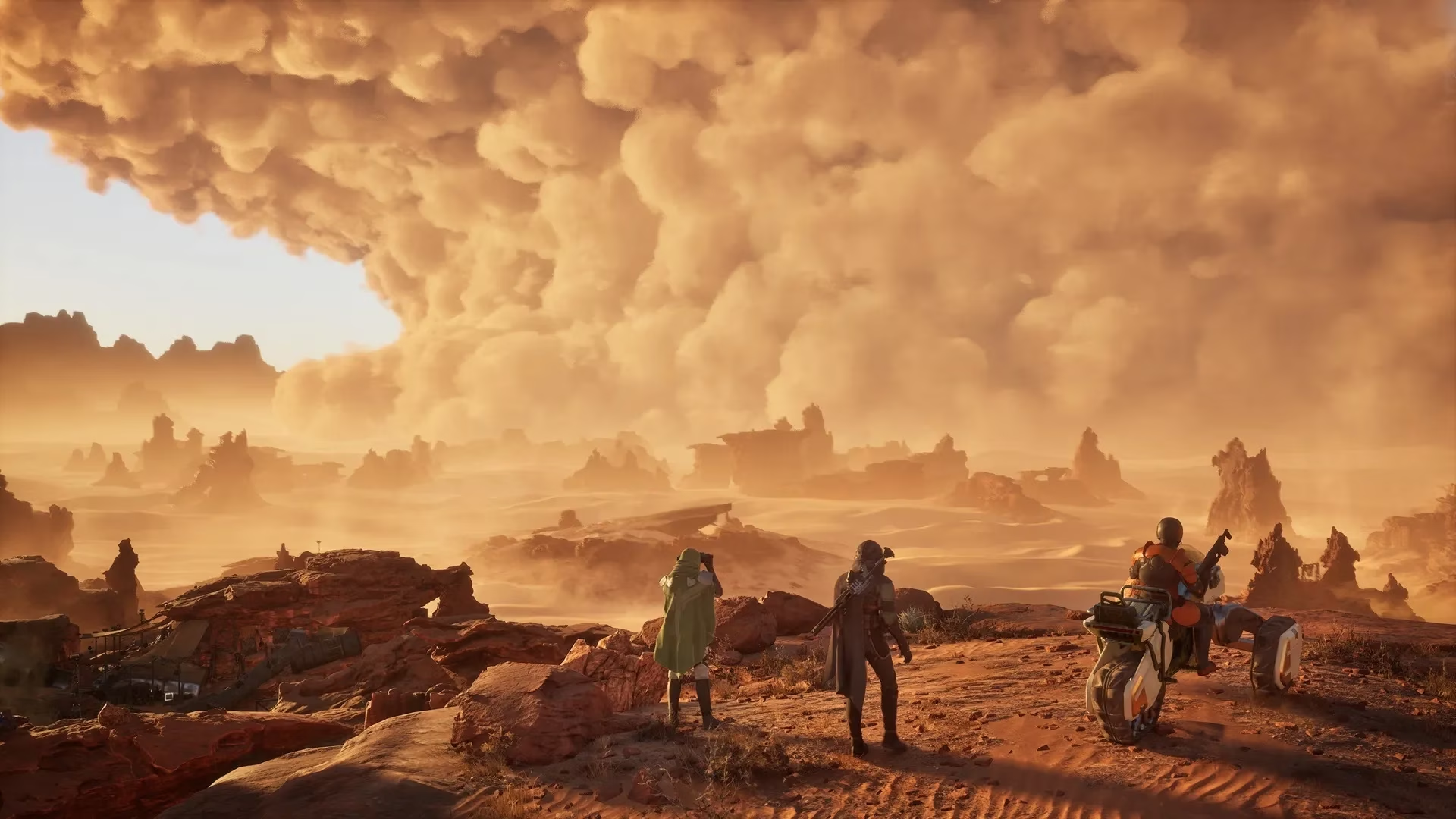
The other major deep desert element is the Coriolis storm. Once a week, a massive sandstorm sweeps through and rearranges the map. A shipwreck or ruin might be buried, while new structures are exposed. Those new locations can contain rare or unique items and schematics. The storm is not random or procedural. It is bespoke, controlled by the developers. Bylos wants a 'Coriolis race' where guilds send scouts to remap the landscape, sell maps, and prepare for weekend battles. The Coriolis storm was a librarian of ruin, reshelving the deep desert every week. The deep desert was a chessboard made of glass, and every guild was trying to move a piece without shattering the board.

Dune: Awakening also includes a system that simulates the political struggles of Arrakis. That system provides changing objectives to aligned players. Bylos mentioned Bingo Brawlers as an inspiration: competition that is not only about shooting everyone. Some political goals might be non-combat, like crafting 500 ornithopters and delivering them to a location. Players will find a way. Give them an arrow, and they will figure out the sandbox. That is what drives these games.
Arrakis is not just a map. It is a character. It erodes you. It awakens you. In 2026, I am still dreaming of spice, still listening for sandworms, still wondering whether I am noble, addicted, free, or simply eroded. The sleeper must awaken. But first, I need water. 💧
As detailed in IGN, large-scale survival games stand out when environmental pressure shapes every decision, and that lens fits Dune: Awakening especially well as its water scarcity, sandworm threat, and shifting deep desert systems turn routine exploration into constant risk management rather than simple open-world progression.
COMMENTS