Renn had learned to distrust quiet horizons. On Arrakis, silence usually meant a storm was gathering, a patrol was nearby, or both. So when a crackle of static cut through her helmet comms during a routine salvage run, she froze. Then a voice—warm, slightly too cheerful—announced that the forecast called for a 100 percent chance of sandstorms. Renn laughed. Since Dune: Awakening launched on May 20, 2025, the survival game had taught her to respect the desert, but it had also given her something she did not expect: a radio dial with a personality.

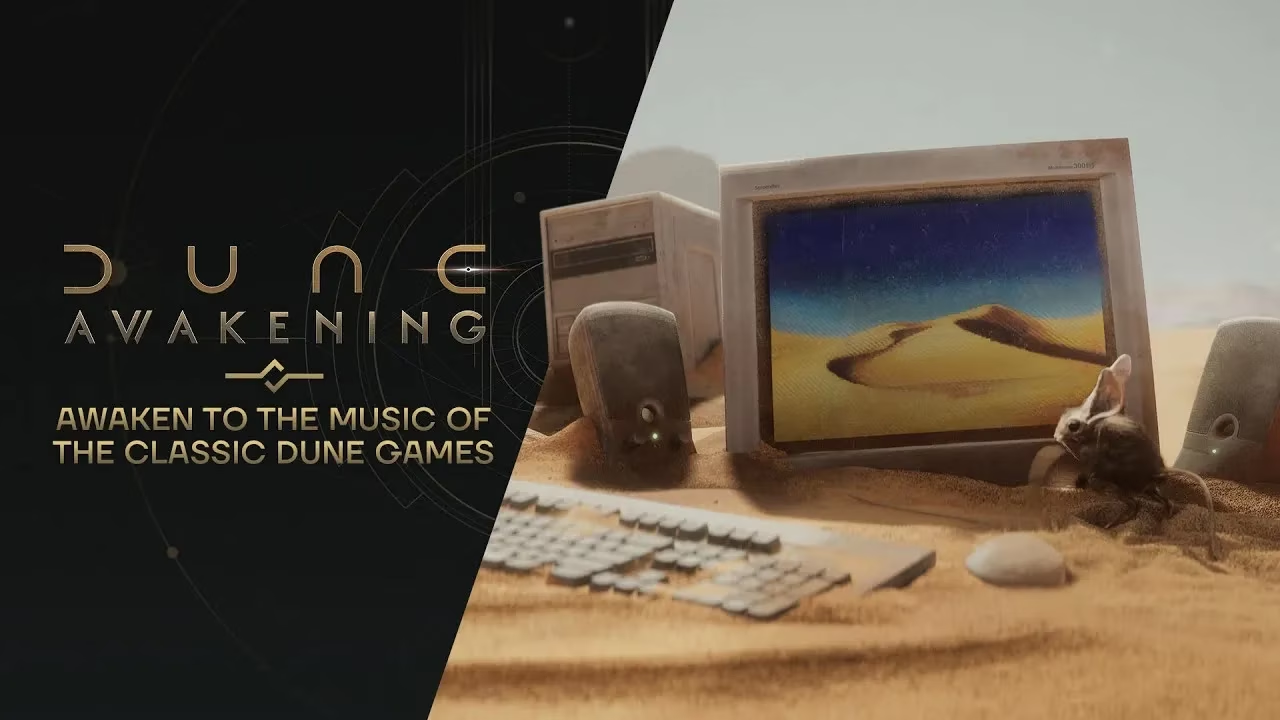
More than a year later, in 2026, that dial still mattered. Funcom had revealed before launch that Dune: Awakening would feature in-game radio, and the announcement carried a delicious surprise for longtime fans. Some stations would play music from the classic Dune games of 1992. The Dune II: Battle for Arrakis soundtrack was composed by Frank Klepacki. Philippe Ulrich and Stéphane Picq composed the Dune: Spice Opera soundtrack, which was remastered in 2024. For Renn, hearing those synths and strange, sweeping melodies while crouched behind a rock felt like finding a relic from another century—one that still knew how to groove.
📻 A Dial Full of Arrakis
The radio was not just a playlist. It was a world-building device, a survival tool, and occasionally a comedy routine. Renn learned to flip between stations while she checked her water stores and watched the horizon. The general broadcasts carried emergency alerts, sandstorm warnings, and news from the Landsraad. Harvester Radio served the spice miners and the commoner workforce, mixing advertisements, survival tips, music, and entertainment. It was the station that felt most like a lifeline, even when it was trying to sell her a better stillsuit.
| Station | What Renn Heard |
|---|---|
| Emergency and Landsraad broadcasts | Sandstorm warnings, emergency notices, political updates |
| Harvester Radio | Ads, survival tips, music, entertainment for spice miners and commoners |
| House Harkonnen station | Propaganda, slave fight coverage, motivational speeches |
| House Atreides station | Propaganda, slave fight coverage, motivational speeches |
The two warring houses of Arrakis each had their own station. Renn found the Harkonnen channel both terrifying and absurd. She imagined a DJ promising a personal meeting with Baron Harkonnen while he floated and growled in his tub of gross black goo. The idea was funny until the propaganda started working on her nerves. The Atreides station was smoother, but it was still propaganda. On Arrakis, even the music came with a political angle.
🎭 Drama in the Static
The radio also delivered drama. Funcom said one of the pleasures on the stations was a full multi-episode radio play. Five Days at Carthag, a radio theatre and Arrakeen Playhouse production, shared its first episode on April 8, 2025. Renn listened to it while repairing a battered ornithopter, the actors' voices cutting through static and wind. It was strange to hear a story inside a survival game, but it fit. Arrakis was a place of myths, and the radio made those myths feel immediate.
By 2026, Dune: Awakening had also added a singleplayer mode, a change that made the radio feel even more like a companion. Renn could pause in a silent outpost, tune the dial, and let Harvester Radio fill the room with ads and survival advice. The game had once been framed as a survival MMO, and Funcom later pushed back on that label, but the radio remained a shared thread. It connected miners, nobles, soldiers, and wanderers through the same frequency.

🎵 The Spice Opera Endures
What Renn loved most was the way the old soundtracks refused to stay buried. The 1992 Dune and Dune II music did not sound like a modern blockbuster score. It sounded like a transmission from a stranger, older Arrakis—one built from pixels and big ideas. Frank Klepacki's Dune II tracks gave the desert a pulse. Philippe Ulrich and Stéphane Picq's Spice Opera gave it mystery. The 2024 remaster meant those sounds could reach Renn's ears with new clarity, even as sand scraped against her visor.
She eventually climbed a ridge and looked out over the wastes. The radio crackled again. This time it was a Harvester Radio ad for a water reclaimator, followed by a survival tip about avoiding deep sand. Renn smiled and turned the dial. Paul Atreides may have stared into a nightmarish future, but Renn had found a simpler pleasure: good music, strange broadcasts, and a signal that made the desert feel less empty. On Arrakis, the radio was not just entertainment. It was proof that someone, somewhere, was still talking.
COMMENTS