In the scorching, unforgiving sands of Arrakis, where the very air is laced with the intoxicating promise of prescience, the Trials of Aql stand as the crucible for every would-be initiate in Dune: Awakening. The first two trials lull the player into a rhythm as predictable as the dual moons crossing the night sky—find a cave, inhale the sacred Spice from an altar, and surrender to a kaleidoscopic, mind-bending vision of Fremen lore. But the third trial? The third trial is a betrayal, a narrative landmine disguised as a pilgrimage, shattering all preconceived notions like a fragile stillsuit flask dropped onto sun-baked stone. It whispers a terrifying truth to the player: nothing in the deep desert is what it seems, and the path to becoming one with the sands is paved with unexpected, often unsettling, turns.
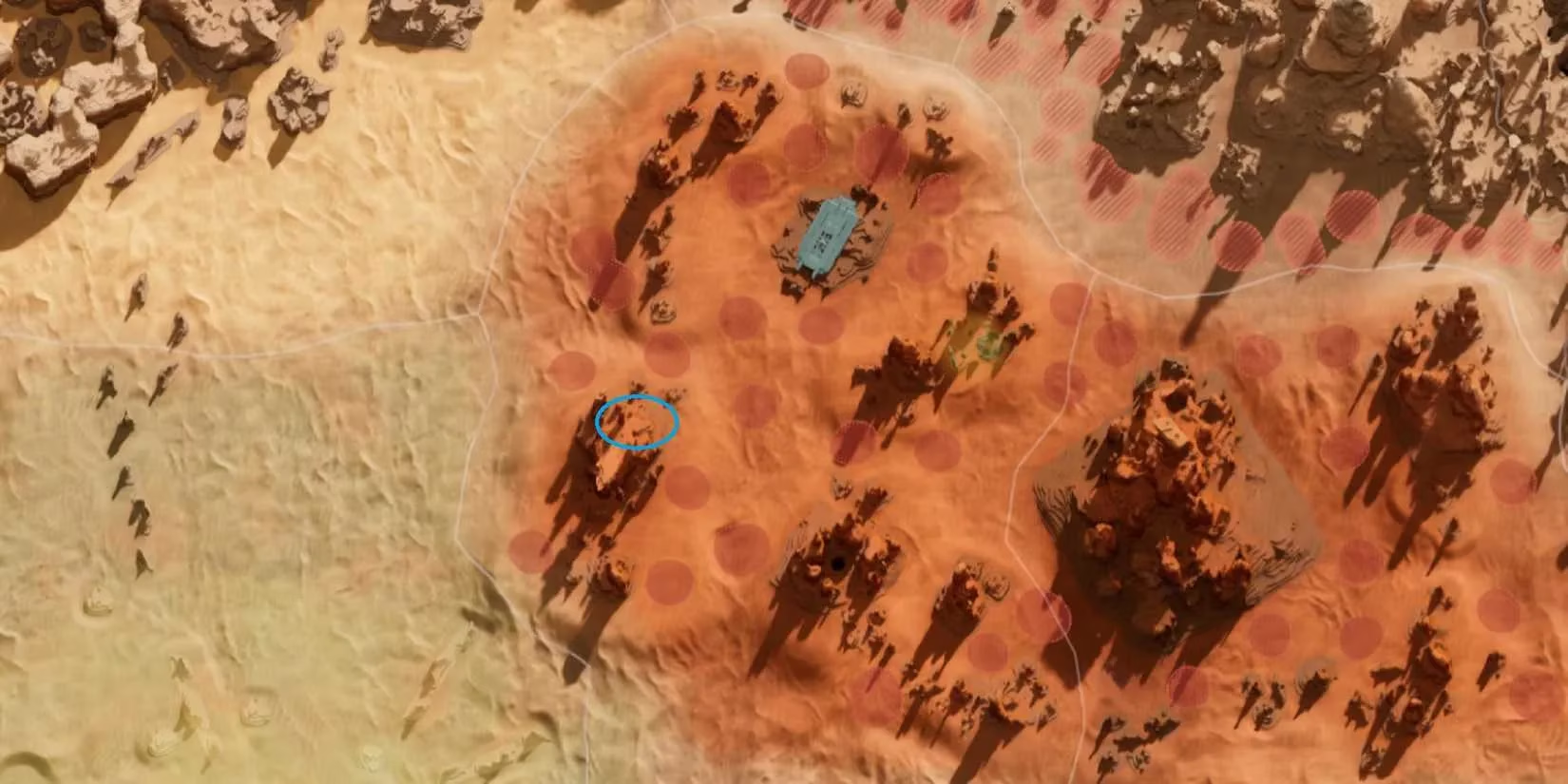
🏜️ Unearthing the Cave of the Lost Pilgrim
The hunt for this elusive trial is an odyssey in itself, demanding the player first navigate the treacherous narrative currents to the quest known as "Moving On." This is the key that unlocks passage into the Vermilion Gap, a region whose very name sounds like a wound in the planet's crust. For veterans who have already conquered the second trial but lingered in other pursuits, a tantalizing shortcut exists: one can march directly to the trial's location and claim its completion, a temporal sleight of hand that feels as satisfying as finding a secret cache of water in the deep desert.
The target is no ordinary hollow in the rock. It is the Cave of the Lost Pilgrim, hunkered on the western flank of the Vermilion Gap. Its entrance, like a shy predator's maw, lurks at the base of a towering cliff. The journey to it is rarely peaceful. Players must often carve their path through hostile forces, their arrival heralded not by silence, but by the clash of steel and the sizzle of lasgun fire. The cave's interior architecture is a deceitful labyrinth; pathways deliberately plunge the seeker underground, a design as deliberately disorienting as a Bene Gesserit truth-trance. Fear not, for the trusty suspension belt—that miraculous piece of off-world technology—awaits to serve as your umbilical cord back to the surface world once the trial's true purpose is revealed.
🎧 The Trial of the Shattered Altar: A Whisper in the Ruins
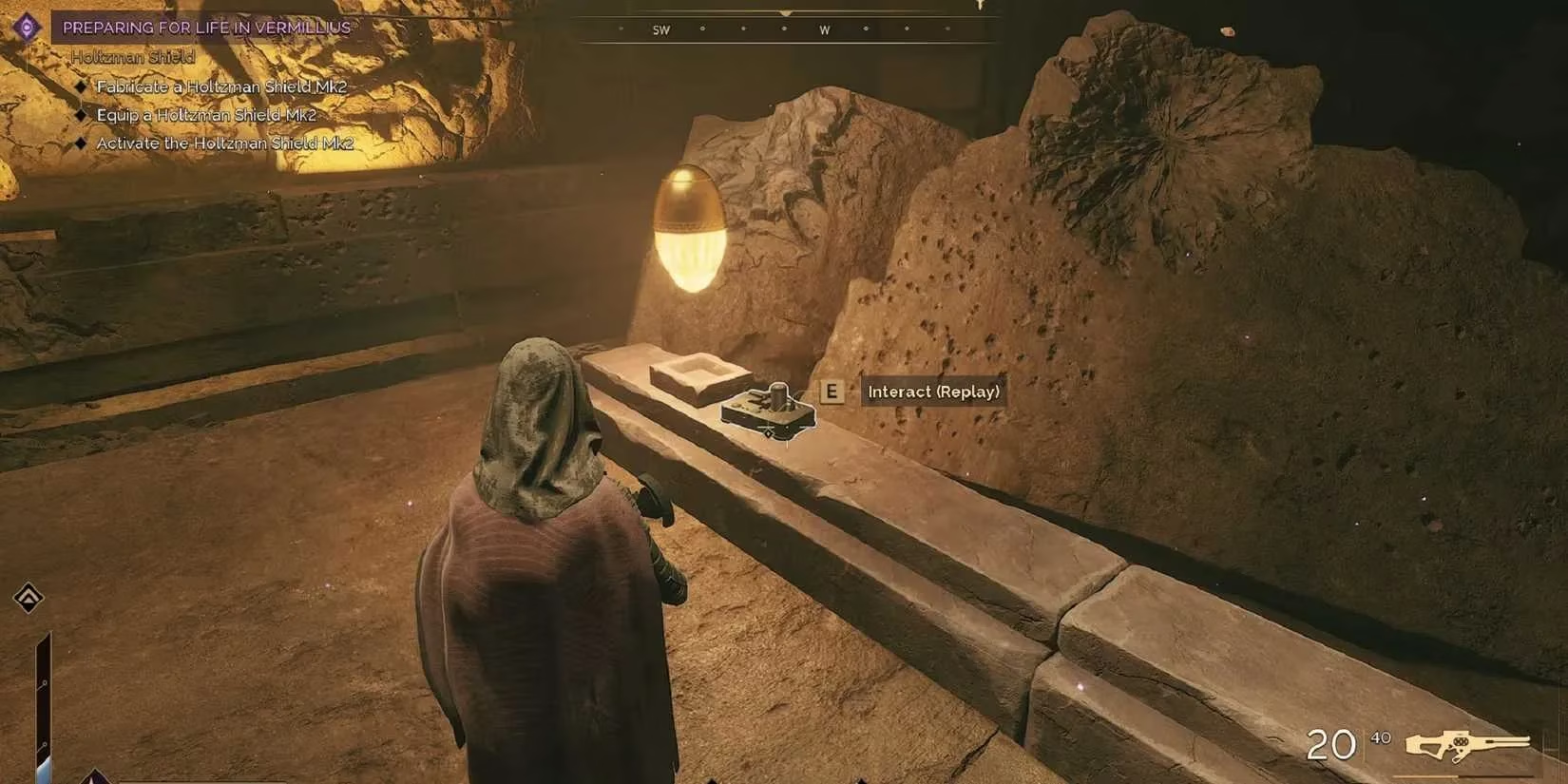
Steeling yourself for the familiar ritual, you approach the altar chamber. But the sight that greets you is one of profound desecration. The altar lies shattered, its ceremonial form broken into fragments like the scattered bones of a forgotten prophecy. The dish that once held the glowing, vision-inducing Spice is gone. There is no aromatic cloud to inhale, no gateway to a fever-dream. The absence is palpable, a void as heavy and significant as the silence between heartbeats in a sandworm's path. The expected climax has been stolen, leaving behind only dust and mystery.
Yet, on the right side of the ruins, a glint of technology catches the eye. A recording device rests there, an anachronistic sentinel. The instruction is devastatingly simple, almost insulting in its brevity after such a fraught journey: Listen to the recording. With a press of a button, a voice—perhaps ancient, perhaps newly laid—fills the cavern. And just like that, as abruptly as a door sliding shut in a Harkonnen keep, the Third Trial of Aql is marked complete.
💥 The Profound Shift: From Participant to Archaeologist
This moment is a masterstroke of narrative subversion. The completion feels bizarre, anti-climactic, like preparing for a grand symphony and hearing only a single, sustained note. The player, conditioned to be an active participant in a psychotropic ritual, is suddenly reduced to a passive archaeologist of someone else's forgotten moment. The trial is no longer about your journey through Spice-addled visions, but about bearing witness to a fragment of history, a message in a bottle cast adrift in the sands of time. This recording is more than data; it is a seed of doubt, the first crack in the foundation of the trials' perceived purpose.
It serves as a brilliant, terrifying turning point. The game essentially leans in and whispers, its voice as dry and inevitable as the desert wind: The easy lessons are over. The true testing has begun. The subsequent trials are now shrouded in ominous uncertainty. If the third trial can be completed not by transcending reality, but by merely listening, then what impossible, mind-rending challenges could the fourth, fifth, or sixth possibly hold? The rules have changed, and the player is left standing in the rubble, grappling with a new, more profound kind of disorientation. The Third Trial of Aql doesn't test your ability to withstand the Spice; it tests your ability to adapt when the script is burned before your eyes. It is the moment Dune: Awakening reveals its true, formidable depth, proving it is not just a game about surviving the desert, but about deciphering its infinitely complex, and often cruel, poetry.
COMMENTS