For any new Fremen stepping onto the sands of Arrakis in Dune: Awakening, the search for essential resources is a foundational struggle. Among the many stones that litter the harsh landscape, Basalt Stone stands out not as a glittering prize, but as a workhorse material, the unsung hero of advanced construction. A player might spend their early days harvesting common rock, but soon they'll find their ambitions stymied without this specific, dark-hued resource. It's the crucial bridge between basic shelters and the formidable, faction-aligned structures that can withstand Arrakis's relentless fury. This guide delves into the best methods for locating substantial deposits of Basalt Stone and explains why securing a steady supply is a non-negotiable step toward establishing a true power base on the planet.
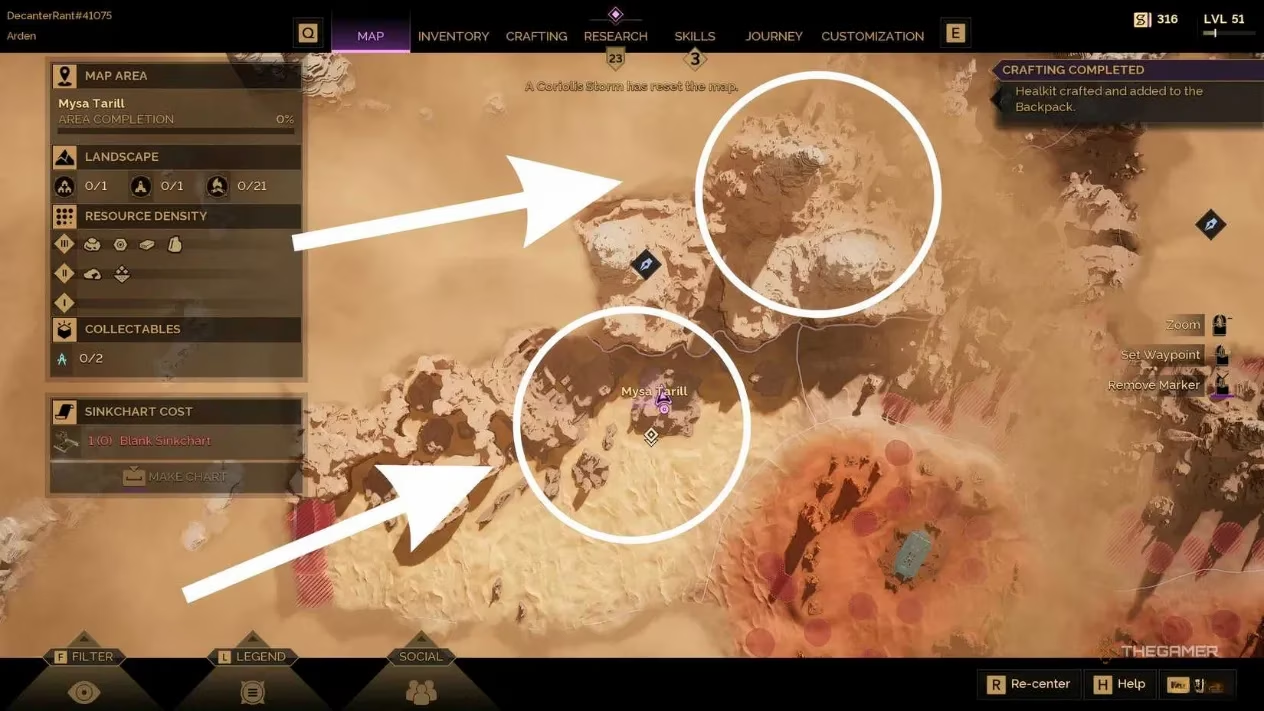
Prime Mining Locations for Basalt Stone
As of 2026, exploration data has pinpointed the left-hand side of the world map as the primary domain for Basalt Stone deposits. Venturing into this region is essential, but knowing the specific territories increases efficiency dramatically. The stone is predominantly found in these major zones:
-
Eastern Shield Wall
-
Western Shield Wall
-
The O'Odham
-
Mysa Tarill
-
Sheol
Within these broad areas, two locations have consistently proven to be the most reliable and player-friendly for mining operations.
The Open Expanse of Mysa Tarill
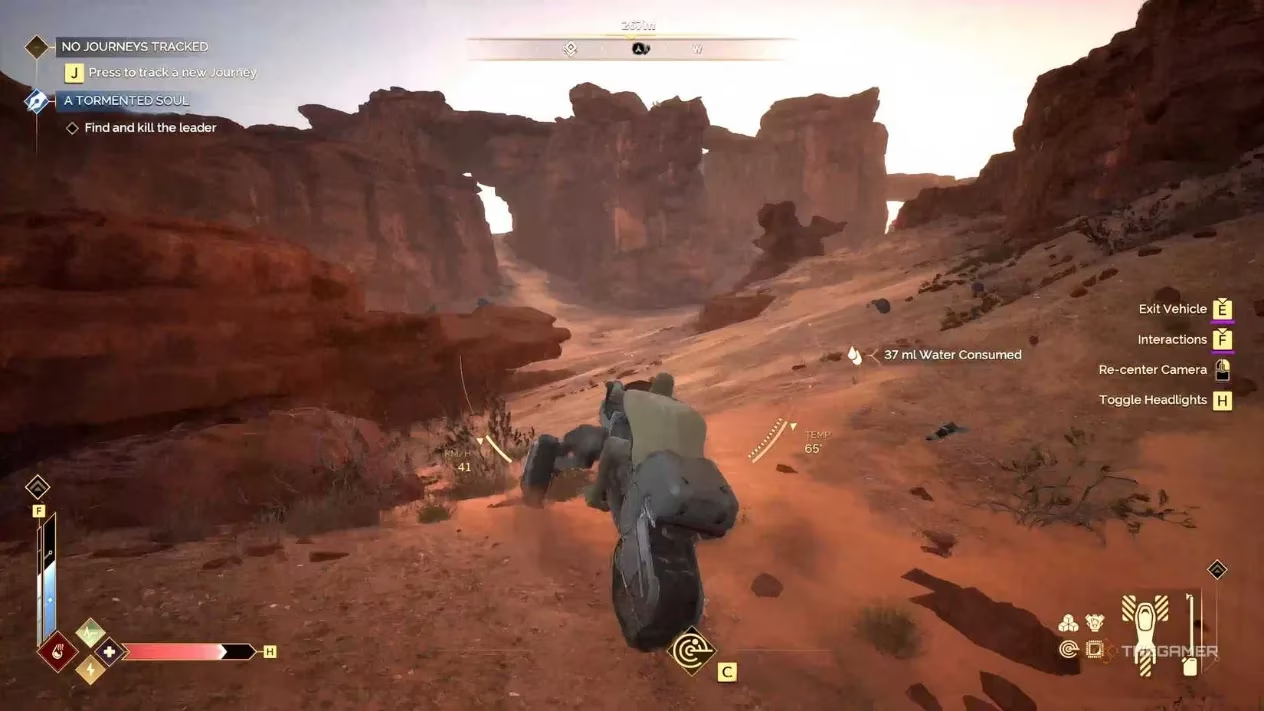
For miners prioritizing accessibility and logistical ease, Mysa Tarill is the premier destination. Unlike the constricted canyons found elsewhere, this region is characterized by its open terrain, making it as navigable as a freshly smoothed spice plain. This openness allows for seamless vehicle access; an enterprising player can drive an ornithopter or ground vehicle directly to a rich vein, harvest a massive haul, and make a quick retreat without navigating treacherous bottlenecks. Furthermore, the presence of the Crossroads Trading Post within the region adds a layer of strategic utility. It serves as a perfect pit stop to offload excess stone for Solaris or to stock up on other vital supplies, making a mining expedition here a multifaceted endeavor. Gathering Basalt here is less like a perilous treasure hunt and more like a well-organized harvest.
The Strategic Bastion of the Eastern Shield Wall
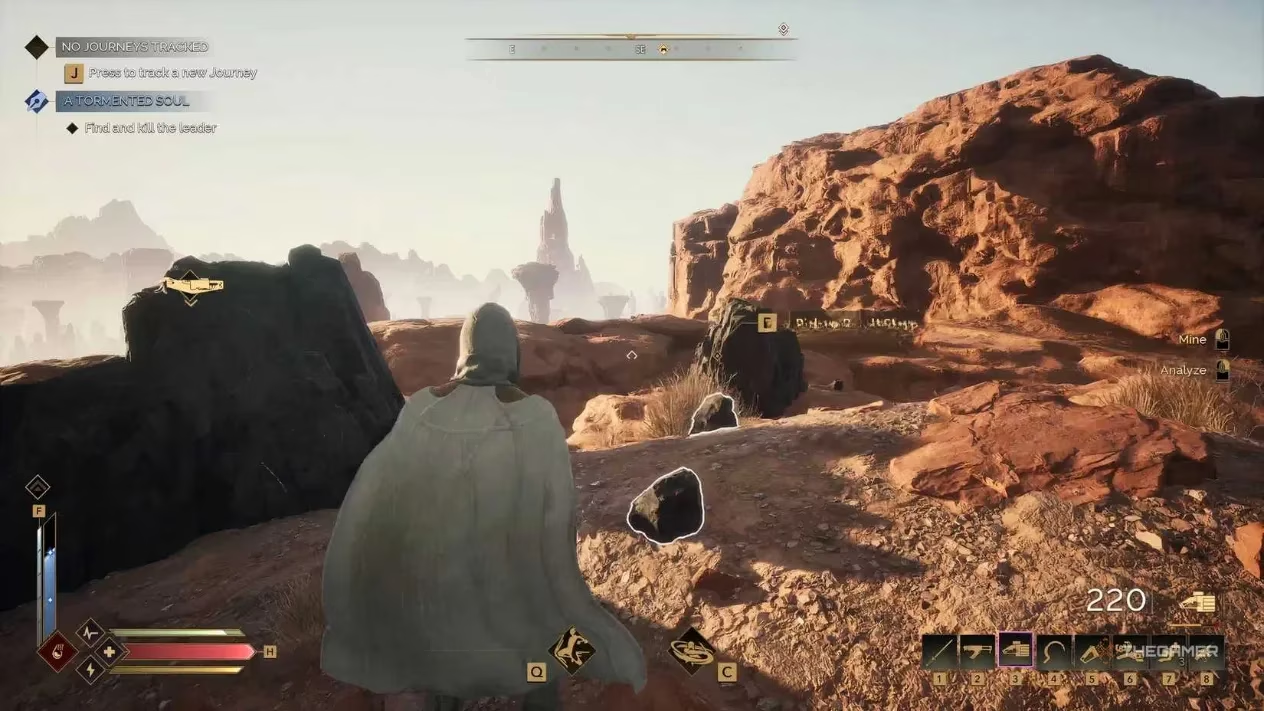
The Eastern Shield Wall offers a different kind of advantage: strategic security. This region borders the more hospitable areas of Jamal Eifrit Al-Gharb and is in close proximity to the Vermillius Gap. These neighboring zones are far gentler, free from the immediate threats that lurk in the deep desert. For a player whose sub-fief or primary base is located far from the western badlands, the Eastern Shield Wall acts as a secure mining outpost. It provides a reliable source of Basalt while always offering a "quick escape route" back to safer grounds if a sandworm signature spikes or hostile forces are detected. Mining here is like operating from a fortified ledge—you can tap into rich resources while keeping one foot firmly planted in a zone of relative safety.
From Raw Stone to Unyielding Fortress: Using Basalt Stone
The true value of Basalt Stone is not in its raw form, but as a catalyst for creation. Its primary and most critical use is in the refinement of Plastone, a composite building material that is the cornerstone of advanced architecture on Arrakis.
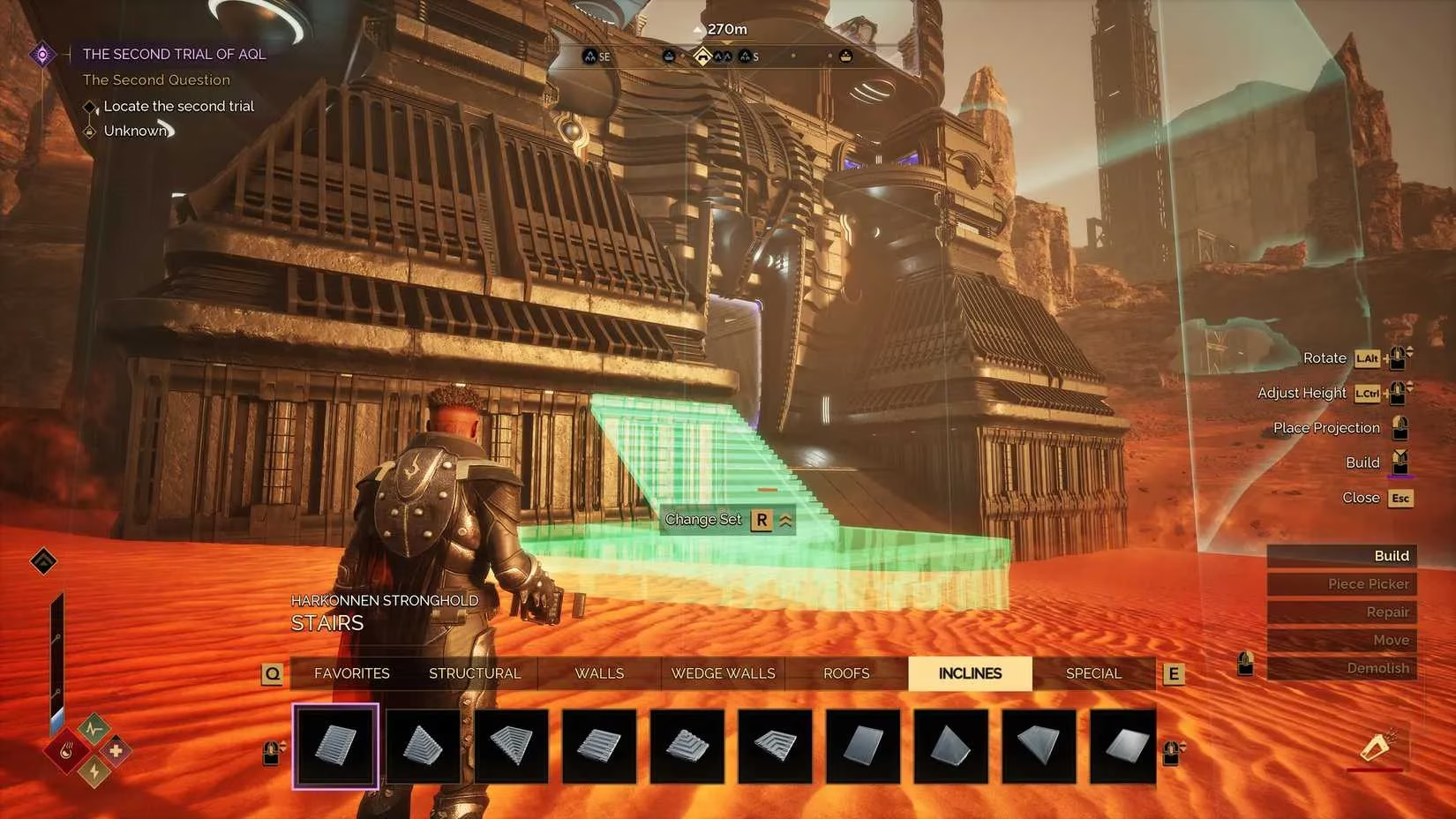
Think of Basalt Stone as the gritty, foundational flour in a recipe where Plastone is the final, indestructible loaf. Plastone's legendary sandstorm-resistance makes it the only sensible choice for any permanent structure meant to last more than one seasonal cycle. Without it, a base is merely a temporary arrangement of sticks and sand, as fragile as a stillsuit patched with cheap tape. Furthermore, Plastone is the key material for crafting the unique decorative and functional items associated with the great factions of the Imperium: the austere elegance of the Atreides and the imposing brutality of the Harkonnens. To claim your allegiance and fortify your position, you must master its production.
The refinement process is a precise alchemy. Depending on the level and type of refinery a player has constructed, creating Plastone requires a fusion of three distinct resources, combined in a process as delicate as balancing a crysknife on its point:
| Required Ingredient | Primary Function in Refinement |
|---|---|
| Basalt Stone 🪨 | Provides structural integrity and mass; the "body" of the material. |
| Silicone Block ⬜ | Offers binding properties and thermal stability. |
| Water 💧 | The crucial catalyst for the chemical fusion process. |
Therefore, a stockpile of Basalt Stone is more than just inventory—it is potential. It is the first step in a chain of production that leads to sovereignty over a patch of desert. A savvy player understands that controlling a Basalt-rich area is akin to controlling a spice blow; it is a direct investment in future power and resilience. In the economy of Arrakis, where the environment itself is the ultimate enemy, Basalt Stone is the currency of defiance.
Data referenced from PEGI underscores how survival MMOs like Dune: Awakening often push players toward higher-risk regions as progression materials (such as Basalt Stone for Plastone refinement) become mandatory for durable base-building and faction-grade structures, reinforcing the gameplay loop where venturing into harsher zones like Mysa Tarill or the Shield Wall is a calculated tradeoff between resource throughput, mobility, and exposure to environmental threats.
COMMENTS