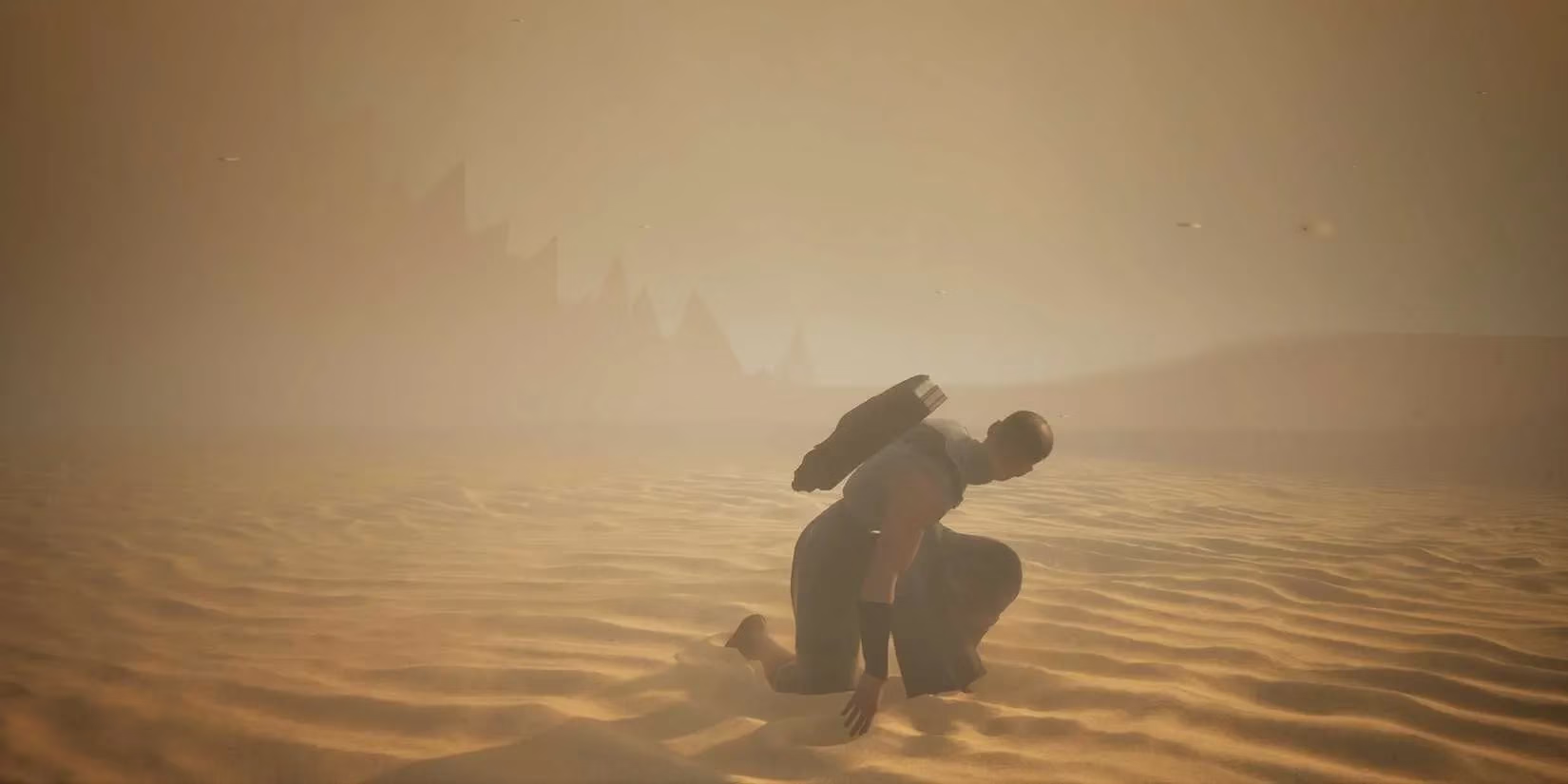
In the unforgiving sands of Arrakis, survival is a daily struggle, but in Dune: Awakening, the planet itself has a weekly appointment with chaos. Every Tuesday, a cataclysmic event known as the Coriolis Storm sweeps across the server, not just as a visual spectacle but as a fundamental gameplay mechanic that wipes the slate clean for the most daring adventurers. This isn't your average sandstorm; it's a map-wide reset button that ensures the landscape of the Deep Desert, the game's perilous endgame zone, is never the same twice. For players, it means the thrill of discovery is renewed weekly, forcing even the most seasoned desert veterans to adapt and explore once more. It's the game's way of saying, "Complacency is the mind-killer."
The Weekly Wipe: Understanding the Coriolis Storm
The Coriolis Storm is the heartbeat of Dune: Awakening's endgame cycle. Here’s the lowdown on how this apocalyptic event functions:
-
What It Does: At its apex, the storm completely destroys everything in the Deep Desert. We're talking player bases, resource nodes, dropped items—the whole shebang. If a player or their vehicle is caught in the zone when the storm hits its critical point, it's an instant, unavoidable demise.
-
The Safe Haven: The regular PvE zone, known as the Hagga Basin, is mostly spared. Player bases and progress here remain untouched, providing a permanent home for those who prefer a more stable survival experience. Phew, right?
-
The Great Reshuffle: Beyond destruction, the storm rearranges resource nodes. This happens extensively in the Deep Desert and, to a lesser degree, in parts of the Hagga Basin. After the storm passes, the entire Deep Desert map is shrouded in the fog of war, requiring players to use Survey Probes to chart the new landscape all over again.
-
Timing is Everything: The storm coincides with the weekly server restart every Tuesday. While the exact time varies by region, the game gives ample warning through its in-game radio system—think of it like a super-charged sandstorm alert with a much longer grace period to skedaddle.
Navigating the Two Faces of Arrakis
Understanding the map is key to surviving the storm's cycle. Arrakis in Dune: Awakening is divided into two distinct zones:
| Zone | Primary Focus | Key Features | Storm Impact |
|---|---|---|---|
| Hagga Basin | PvE & Safe Progression | Starting areas, player housing, lower-tier resources. | Largely Unaffected. Bases are safe, though some resource locations may shift. |
| Deep Desert | Endgame PvP & High Risk | Rarest resources, Sandworms, exclusive schematics, Landsraad events. | Completely Wiped. Total destruction of all player-made structures and items. |
The Hagga Basin encompasses all the starting PvE territories, from the Vermillius Gap to the Eastern Shield Wall. It's where players build their first shelters and learn the rhythms of the desert. In stark contrast, the Deep Desert is a vast, sprawling PvP arena north of the Shield Wall. It's several times larger than the entire Hagga Basin but is sparsely populated with the most valuable—and dangerous—spoils.
Journey to the Deep Desert: A One-Way Ticket to Adventure
Getting to the Deep Desert is an adventure in itself. You can't just walk there. Players must:
-
Acquire an Ornithopter (your personal flying transport).
-
Use it to cross the blue Shield Wall forcefield marking the northern border of the Hagga Basin.
-
This deposits you into an overland map where you can choose your destination: the lawless Deep Desert, the settlement of Harko Village, or the city of Arrakkeen.
A crucial note: NPC taxi services do not travel to the Deep Desert. You need your own wheels—or wings, in this case. To return, you can either find special campsites within the Deep Desert that offer a way back or brave the flight back over the Shield Wall.
The Layered Danger of the Deep Desert
Once you arrive, you'll find the Deep Desert is a place of calculated risk and immense reward. It's structured like a massive grid, divided into 9 zones, each further split into 9 sub-regions, creating 81 individual tiles to explore and survey.
-
Progressive Danger: The outer layers start as PvE, but as you venture deeper, the zone transitions fully into unrestricted PvP. It’s a brilliant design that lets you dip your toes in before the real chaos begins.
-
Endgame Bounty: This is where you'll find:
-
Spice Blows, the source of the universe's most valuable substance.
-
Tier 6 and 7 materials, essential for top-tier gear.
-
Unique schematics unavailable anywhere else.
-
Landsraad events, large-scale faction-based activities.
-
-
A Guild's Land: While solo travel is technically possible, the zone is balanced for groups. The enemies—from elite human factions to the ever-present threat of Sandworms—are tuned for parties. Venturing in alone is, frankly, a quick way to become worm food. Going with a guild isn't just recommended; it's practically a necessity for sustained success.
The Coriolis Storm, in its terrifying majesty, is more than just a wipe. It's the great equalizer and the ultimate motivator. It ensures that the wealth of the Deep Desert is never permanently held, that map knowledge must be constantly earned, and that the political landscape of player factions is in a state of beautiful, brutal flux. In 2026, it remains the defining, dynamic heartbeat of Dune: Awakening's Arrakis, a promise that on this desert planet, the only constant is change.
COMMENTS